
Gold Coast Seaway marks 40 years of coastal engineering and connectivity
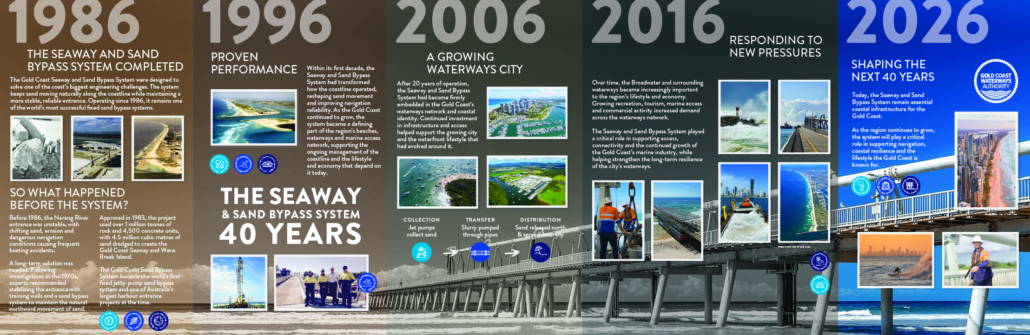
The Gold Coast Waterways Authority has marked 40 years since the opening of the Gold Coast Seaway, recognising four decades of supporting navigation, recreation and connectivity across the Gold Coast waterways network.
Since opening in 1986, the Seaway has become one of the city’s most significant pieces of coastal infrastructure, helping shape the Gold Coast’s identity as one of Australia’s premier waterfront destinations.
Officially opened by then Queensland Premier Joh Bjelke-Petersen, the project represented one of Queensland’s largest infrastructure investments of its time and reflected the confidence and ambition that helped shape the modern Gold Coast.
Central to the success of the Seaway is the Gold Coast Sand Bypass System — the first permanent system of its kind anywhere in the world and a pioneering engineering solution designed to maintain the natural movement of sand along the coastline while protecting the stability of the Seaway entrance.
The engineering developed on the Gold Coast would go on to influence coastal management internationally and remains recognised as a world-leading example of long-term coastal planning and innovation.
Together, the Seaway and Sand Bypass System continue to support navigation, recreation, coastal access and the ongoing resilience of the Gold Coast coastline.
Queensland Minister for Education and the Arts and Member for Surfers Paradise, John-Paul Langbroek said the anniversary recognised both the historic significance and ongoing importance of the Seaway.
“For 40 years, the Gold Coast Seaway has played an important role in supporting boating, tourism, recreation and coastal access across the city,” Minister Langbroek said.
“The Seaway and Sand Bypass System are internationally recognised and remain a defining part of the Gold Coast coastline.”
“This anniversary is an opportunity to reflect on the foresight, innovation and long-term vision that helped shape the Gold Coast we know today.”
Chair of the Gold Coast Waterways Authority, Deanna Nott, said the anniversary highlighted the long-term management of the waterways and coastline.
“The Seaway remains one of the Gold Coast’s great engineering success stories,” Ms Nott said.
“What makes the Seaway so significant is the foresight and innovation behind it.”
“Projects like the Seaway, Wave Break Island and the Sand Bypass System only exist because previous generations planned ahead and invested in the future of the Gold Coast.”
“Our responsibility now is to continue that planning and long-term thinking for future generations.”
“The Seaway remains critical to the resilience, accessibility and connectivity of the Gold Coast waterways.”
CEO of the Gold Coast Waterways Authority Chris Derksema said the Seaway continued to play a vital operational role along the coastline.
“Before the Seaway, the entrance to the Broadwater was constantly shifting and difficult to navigate,” Mr Derksema said.
“The Seaway created a stable and reliable connection between the Broadwater and the ocean.”
“Wave Break Island was created alongside the Seaway as part of the broader solution to stabilise the entrance and help protect the coastline.”
“Today, the Sand Bypass System continues to move around 500,000 cubic metres of sand each year to help maintain the stability of the coastline and ocean entrance.”
“Most people probably never think about the system, but it’s working every day to help keep the coastline stable and accessible.”
“Coastal systems are constantly changing, which is why ongoing monitoring and management remain so important.”
The anniversary event brought together government representatives, engineers, industry stakeholders and community leaders to recognise 40 years of the Gold Coast Seaway and its ongoing role in shaping the future of the city.


