Year in Review – 2018 – Shaping our waterways
2018 has been a busy year – read all about what we’ve done to continue to improve access to and management of our waterways here
At the Gold Coast Waterways Authority, we’re determined to not get tied up with red tape or give members of the public the run around on waterways management questions. We know that governance of Gold Coast waterways can often be complex and confusing and that it is very important to get to the right person to handle each query quickly.
That’s why we’ve developed “Who’s Who in the Blue”.
It’s a handy tool to help identify;
We hope “Who’s Who in the Blue” is valuable to you!
2017 was an exciting one as we worked hard to secure the future of the Gold Coast’s waterways. Read our Year in Review here: Gold Coast Waterways Authority – Delivering on our waterways 2017
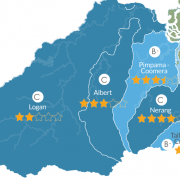
Figure 1: Southern Catchments 2016/17 Report Card. Source: Healthy Land and Waters 2016/17 report card hlw.org.au/reportcard
The 2016/17 Healthy Land and Waterways Report card has been released, with waterways in the Southern catchments ranging from fair to good. The grades presented an overall decrease in waterways health in the southern region, in most part due to an increase in sediment loads.
The effects of ex-Tropical Cyclone Debbie were highlighted through increase sediment and pollutant loads coming from the upper catchments, stressing the importance of good streambank vegetation to reduce erosion and the amount of sediments entering our waterways. The report has also highlighted that in urban areas, the use of effective stormwater management will further increase the resilience of the region to extreme weather events.
Acknowledging the findings of the report card, the Gold Coast Waterways Authority are proactively exploring ways to maintain and enhance the condition of the Gold Coast waterways, including:
Our Gold Coast waterways are a mainstay of the Gold Coast’s lifestyle, underpin the Coast’s identity, and provide opportunities for locals and visitors to undertake recreational activities on and beside the waterways. In April 2017, we conducted and reported on the economic and social values of our waterways.
We engaged NCEconomics, an independent consulting firm, to conduct the analysis and to report on the economic and social values of the Gold Coast’s waterways to the community and businesses. We invited the community to contribute to the management of our waterways through an online survey.
The survey covered some basic information about the participant’s households or businesses and their views about our waterways. The marina and waterway-based tourism industries were of particular interest due to the significant reliance of waterways to underpin businesses, and due to the fact that quality waterways stimulate the purchase and use of vessels of all shapes types and sizes.
Outputs from our study will include developing an economic profile of the marina and waterway-based tourism industries (size, contribution to Gross Regional Product, direct and indirect employment etc.) and insight to better understand the importance of waterways to your industry. Our report will also be publicly available as a resource to industry.
Gold Coast Waterways Authority (GCWA) recognises that the existing values the community places on Gold Coast waterways will be challenged in the future through population growth, a changing climate and other pressures. This acknowledgement led to the development of GCWA’s draft Resilience Plan.
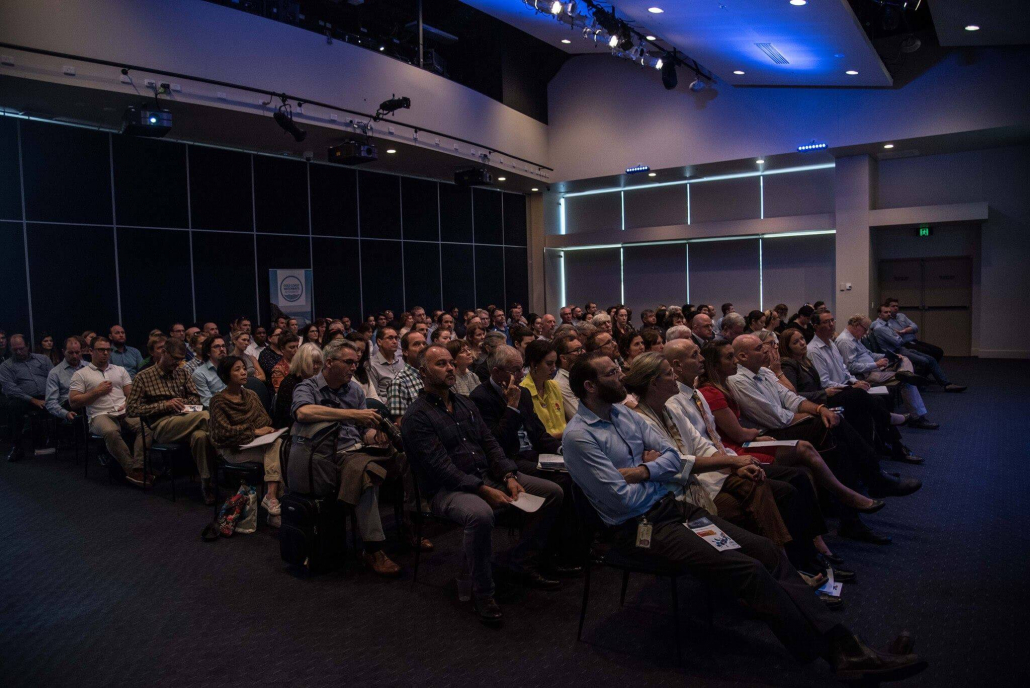
The GCWA was proud to lead the first-ever conversation with the people of the Gold Coast on the long-term future of our waterways ‘Gold Coast Waterways 2017 and Beyond’ was held on the 22nd May 2017 and hosted close to 200 participants from industry, academia, community and business.
We were delighted to welcome a number of key agency speakers including keynote speaker Susanne M. Torriente, Chief Resilience Officer from the City of Miami Beach:
How would the Gold Coast bounce back from a major weather event such as extreme flooding or a hurricane? What about an event twice the size of ex-tropical Cyclone Debbie? As a water city, we’d all be impacted. Susy addressed lessons from Miami, in particular how Florida coastal cities are building resilience. In the lead up to our resilience symposium, Susy chatted with ABC Gold Coast about what the Gold Coast can learn from the Miami experience.
The full program, which includes detailed information about our speakers, can be accessed here: Program: Gold Coast Waterways 2017 & Beyond
Outcomes from the day will assist in sculpting the Resilience Plan which is expected to go out for public consultation later in 2017.
Photo credit: Elise Strålberg, Griffith University and Nicole Munro, GCWA

Predominant southeasterly winds, the significant northern drift of sand and wave climate combined to move an estimated 500,000 cubic metres of sand along the south-east Queensland coast each year.
Over time the Nerang River mouth moved northward by up to 60 metres each year, causing land erosion and changing sandbanks at the bar and adjoining Broadwater.
In the early 1800s the Nerang River entered the Pacific Ocean where the Gold Coast Convention Centre is located. In 1930 the entrance was where Seaworld is today.
It was estimated that by 2050, the entrance would be opposite Runaway Bay if no action was taken, and the township of Currigee on South Stradbroke Island would be in danger.
Sadly, it was too late for Moondarewa. Moondarewa was a coastal town established on Stradbroke Island. In 1984 it sat in the centre of the Southport Bar and was lost forever to the volatile Nerang River entrance. This is a clear indication of the obstacle that the untrained Bar presented to development of the Broadwater and adjacent land.
In the late 1970s, the Queensland Government conducted intensive research into the possible solutions and in 1983, the Queensland Government took action to stabilise the river mouth.
Research revealed that with the magnitude of the northward drift of sand along the coastline, any scheme to stabilise the entrance would require a commitment to artificially bypass sand across the river mouth in perpetuity. The Delft Hydraulics Laboratory of Holland, which had previously researched and reported on the beach erosion problems on the Gold Coast, again in 1976 presented a report to the Queensland Government which established a number of parameters which would be used in the final design of the scheme.
It was clear that the most economical approach would be to construct two breakwaters to form a new entrance through the Spit, just south of the existing entrance. Model studies at this time aided the design of these walls to ensure they would be capable of withstanding the cyclonic conditions that may be encountered.
It was also shown that orientation of the breakwaters to 15 degrees north of east and increasing the length of the southern wall would reduce the entry of ocean swells. Other model studies investigated the effects of wave penetration into the Broadwater. From this evolved the need to construct an island. Wave Break Island, to capture storm waves and protect the western foreshore of the Broadwater.
The number of methods were then evaluated to bypass sand across the entrance. As no comparable system existed elsewhere in the world, this task was not an easy one.
The system finally selected involved pumping sand trapped by the southern wall through a pipeline under the seaway to discharge onto the ocean beach of South Stradbroke Island.
Finally an exhaustive environmental study of the entire scheme was undertaken. With satisfactory answers to all questions, the Queensland Government, in 1983, decided that the Nerang River Entrance Stabilisation Scheme should proceed. The epic project cost $50 million and used one million tonnes of imported rock, two layers of 20 and 25 tonne concrete cubes (4,500 cubes in total) and dredged 4.5 million cubic metres of sand.The large-capacity fixed-sand bypassing system is an integral part of the design of the seaway and currently pumps 500,000 cubic metres of sand across the Seaway each year.
Today, the Gold Coast Seaway facilitates transit between the Broadwater and the ocean for recreational and commercial vessels. The sand bypassing system, ongoing dredging and construction of Wave Break Island have ensured that the entrance to the Broadwater was stabilised without detriment to surrounding beaches. The Gold Coast Seaway is an unqualified success proving that although nature can’t be tamed, she can be guided.


40-44 Seaworld Drive
Main Beach Qld 4217
PO Box 107
Southport Qld 4215
Any damaged or missing aids to navigation such as beacons, buoys, markers or signs, should be reported as soon as possible on
07 5539 7350
For community engagement, communications or media enquiries please contact mail@gcwa.qld.gov.au
Who’s Who in the Blue explains who is responsible for managing, protecting and regulating Queensland’s waterways, particularly on the Gold Coast.
It clarifies agency roles across safety, environmental protection, pollution response, compliance and infrastructure, helping avoid confusion and duplication.
Overall, it’s a quick reference guide that supports coordination, accountability and effective waterway stewardship.
GCWA managed multi-use destinations, building infrastructure for commercial and recreation use of Gold Coast waterways.
The Gold Coast Waterways Authority acknowledges and pays respect to the traditional custodians, the Yugambeh peoples of South East Queensland, including the Kombumerri, Mununjali, Wangerriburra, Bullongin and other clans, and their Elders past, present and emerging. We recognise their unique and ongoing spiritual and cultural connection with the land and waters of the Gold Coast area.
Status: Closed
The Sand Bypass System (SBS) jetty is a working platform and is closed to the public whenever construction activity, sand pumping operations or maintenance works are underway, or during severe weather events.
For safety reasons, the jetty will remain closed until the end of 2026 while essential maintenance and ongoing sand pumping operations continue. We appreciate your understanding.
To find alternative jetty facilities, please visit the GCWA Destinations Map.
GCWA’s tidal works mapping is a public resource for general information purposes only.
The tidal works mapping is not a cadastral survey or hydrographic survey product. It should not be relied upon as the basis for making any decision, whether a business, conveyance, development, property boundary, property description, property title, property transaction, or any other decision.
GCWA makes no warranty, representation, or guarantee, express or implied, as to the accuracy, completeness, content, reliability, suitability, or timeliness, with respect to the information or related graphics.
GCWA has taken care in preparing the mapping information, but accuracy is not guaranteed, and the information contained in the tidal works mapping must not be construed or used as a legal description of any property. Under no circumstances will GCWA be liable for any damages whatsoever, including business interruption, loss of business information, loss of data, loss of profits, property valuation, or any other damage, arising from use or misuse of this tidal works mapping.
Any errors or omissions should be reported to GCWA in writing by email to mail@gcwa.qld.gov.au.
Status: Closed
The SBS jetty is a working platform and for safety reasons is not open to the public during construction projects, when operating, undergoing maintenance or during severe weather events.
Until the end of 2025 while maintenance works, and sand pumping operations take place, the jetty will be closed.
Your understanding is appreciated, to find alternative jetty facilities please visit the GCWA destinations map.
Tidal works mapping information
GCWA’s tidal works mapping information is a public resource for general information purposes only. It is not a cadastral survey or hydrographic survey product. It should not be relied upon as the basis for making any decision, whether a business, conveyance, development, property boundary, property description, property title, property transaction, or any other decision. GCWA makes no warranty, representation, or guarantee, express or implied, as to the accuracy, completeness, content, reliability, suitability, or timeliness with respect to the information or related graphics. GCWA has taken care in preparing the mapping information, but accuracy is not guaranteed, and the information contained in the GCWA Open Data Portal must not be construed or used as a legal description of any property. Any errors or omissions should be reported to GCWA in writing by email to mail@gcwa.qld.gov.au. Under no circumstances will GCWA be liable for any damages whatsoever, including business interruption, loss of business information, loss of data, loss of profits, property valuation or any other or damage arising from use or misuse of this mapping information.
| I want to talk to someone about… | Officer | Phone number |
| reporting oil pollution, a significant navigational hazard, or a damaged aid to navigation.Waterways Vision and Waterways Management Strategy | Waterways Operations Crew | 07 5539 7350 |
| a media issue | Senior Communications Advisor | 07 5539 7350 |
| a project | Program Delivery team | 07 5539 7350 |
| the Sand Management Plan | Planning and Innovation team | 07 5539 7350 |
| Waterways Access
· Dredging · Public pontoons & other marine infrastructure · Sand Bypass |
Program Delivery team | 07 5539 7350 |
| Waterways Management | Waterways team | 07 5539 7350 |
| · Anchoring and Mooring Compliance
· Aquatic Events · Doug Jennings Park · Abandoned vessels · Aircraft take-off and landing permits |
Waterways team | 07 5539 7350 |
| ·Navigation Aids
·Signage ·Pollution |
Waterways Operations Crew | 07 5539 7350 |
| Marinas | Waterways team | 07 5539 7350 |
| Private pontoons, jetties & boat ramps | Waterways team | 07 5539 7350 |
| Buoy Moorings | Planning and Innovation team | 07 5539 7350 |
| Executive Governance | 07 5539 7350 | |
| GCWA Board, CEO matters | 07 5539 7350 | |
| Community Engagement, Sponsorships & Partnerships | Community Engagement Officer | 07 5539 7350 |
| Business Management | Business Services team | 07 5539 7350 |
| Accounts Payable – General Accounts | Business Services team | 07 5539 7350 |
| Accounts Payable – Projects | Program Delivery team | 07 5539 7350 |
| Accounts Receivable | Business Services team | 07 5539 7350 |
Status: Closed
The SBS jetty is a working platform and for safety reasons is not open to the public during construction projects, when operating, undergoing maintenance or during severe weather events.
Until the end of 2025 while maintenance works, and sand pumping operations take place, the jetty will be closed.
Your understanding is appreciated, to find alternative jetty facilities please visit the GCWA destinations map.